Downtime caused by rolling mill bearing failure brings heavy losses to steel rolling plants: frequent bearing replacements, reduced mill availability and increased total operating costs. Based on abundant on-site service and manufacturing experience, our engineering team summarizes four actionable strategies to lower rolling mill bearing consumption, mitigate premature fatigue failure and maximize bearing service life.
1. Track and Record Bearing Usage & Failure Data
Targeted improvement measures cannot be implemented without clear failure analysis. We recommend building a complete data‑recording system covering six core dimensions to identify common failure patterns:
1)Baseline conditions of mill design and mechanical accuracy
2)Changes of rolled products and production processes
3)Actual performance of bearing lubrication and sealing systems
4)On‑site conditions of mill adjustment and transmission assemblies
5)Precision of assembly spare parts and mounting / dismounting environment
6)Bearing failure modes and corresponding installation positions
By cross‑referencing operational data and failure records, maintenance teams can locate root causes instead of solving problems by trial and error. Data‑driven diagnosis lays the foundation for effective consumption reduction.
2. Achieve Balanced Strength Matching for All Bearing Components
Bearing service life is restricted by the weakest link inside the whole bearing‑housing system. Under the premise of sufficient rigidity and supporting capacity of the bearing housing, select bearings with higher load‑carrying capacity. Meanwhile, optimize dimensions of each bearing component according to real‑world working conditions, to realize equivalent strength among different parts.
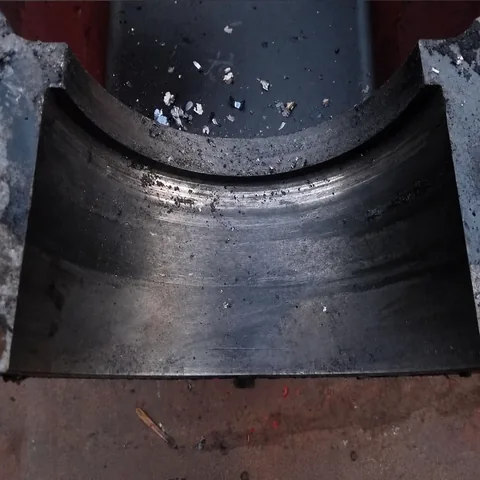
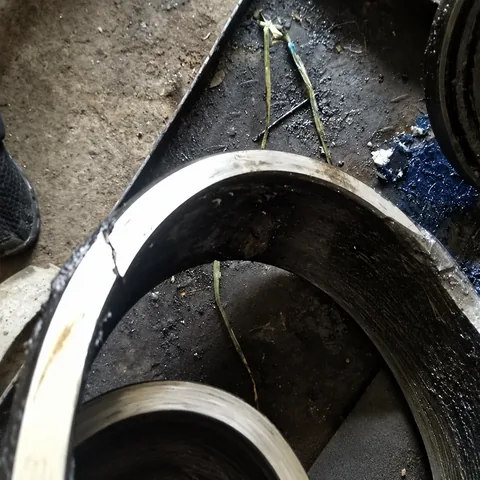
A typical field case is severe housing wear and deformation accompanied by frequent outer‑ring fractures. Under such working conditions, we adopt an optimized design: increase outer‑ring wall thickness and reduce roller diameter appropriately. This modification improves outer‑ring strength, rebalances internal stress distribution and extends overall bearing service life. Over‑design for a single part should be avoided.
3. Adopt High‑Quality Clean Bearing Steel
Non‑metallic inclusions, especially oxide inclusions inside bearing steel, form inherent weak points. They trigger stress concentration and accelerate fatigue crack initiation, resulting in unexpected premature bearing damage.
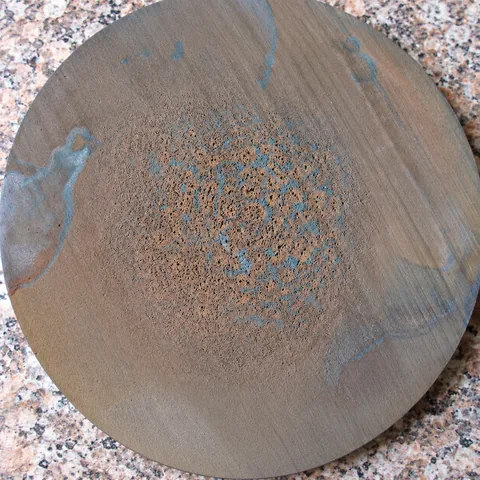

To solve this material‑level risk, vacuum‑degassed steel or electroslag remelted (ESR) bearing steel is highly recommended. Although the unit price of high‑cleanliness bearing steel is higher, fewer unexpected bearing failures and higher mill availability greatly cut downtime losses. From the perspective of total cost of ownership, high‑quality clean steel brings better economic benefits for steel‑making enterprises.
4. Optimize Bearing Precision Grade, Internal Clearance and Mounting Fit
Precision, internal clearance and mounting fit interact with each other, and jointly govern bearing performance. Improper selection of any parameter will lead to early failure even for high‑quality bearings.
Select Appropriate Precision Grade
Choose accuracy class according to rotational accuracy requirements and target service life.
-Precision cold‑strip mills: four‑row cylindrical roller bearings P5; thrust bearings P0
-Standard cold and hot‑strip mills: four‑row cylindrical roller bearings P6; thrust bearings P0
-Blooming and finishing mills: four‑row cylindrical roller bearings P0; thrust bearings P0
-Intermediate mill groups: four‑row cylindrical roller bearings P6 or P0; thrust bearings P0
-Finishing mill groups: four‑row cylindrical roller bearings P6; thrust bearings P0
Higher precision brings multiple benefits: lower internal stress for stable component dimension, improved surface roughness for stable oil‑film formation, anti‑creeping reliable fits, better high‑speed performance with less heat generation, finally reducing total bearing consumption and raising mill uptime.
Reasonable Internal Clearance Selection
Internal clearance directly influences load distribution, friction status, temperature rise and service life. Within allowable working limits, smaller working clearance contributes to longer bearing life. For most rolling mill applications, C3 or C4 clearance groups are widely adopted for four‑row cylindrical roller bearings:
-C3 clearance: for cold rolling, light‑load hot rolling and applications with shaft fit below n6
-C4 clearance: for heavy‑load hot rolling, blooming and roughing mills with fit P6 / r6 or above
-Thrust bearings: select C0 or other groups according to axial load and positioning requirements
Field failure can provide diagnostic clues:
1)Bearing burnout (excluding chatter, component collision and poor lubrication): likely caused by too‑small working clearance.
2)Fractured rings or rollers (excluding material defects, heavy shock load and incorrect installation): usually triggered by excessive clearance, leading to insufficient load‑bearing wrap angle (ideal wrap angle:120°‑150°).
Important reminder: Bearings from different manufacturers cannot be directly interchanged blindly. Always verify inner‑ring dimension tolerance, raceway tolerance and internal clearance before cross‑vendor replacement.
Scientific Mounting Fit
Four‑row cylindrical roller bearings and supporting thrust bearings adopt totally different fit strategies due to different load conditions:
1)Four‑row cylindrical roller bearing: inner ring bears rotating radial load → interference fit on roll neck; outer ring bears static concentrated load → interference fit inside housing bore.
2)Auxiliary thrust bearing: only undertakes axial load and positioning, requires easy assembly and disassembly → clearance fit between inner ring and roll neck; large clearance between outer ring and housing bore.
Roll neck, housing bore and mating faces shall satisfy geometric tolerance and roughness requirements in relevant standards. Even well‑selected bearings will fail prematurely if matching surfaces have poor machining quality.
Reducing rolling mill bearing consumption is a systematic work covering data statistics, component design optimization, raw‑material selection and on‑site mounting parameters. Instead of simply purchasing higher‑grade bearings, steel plants should combine actual mill conditions to adjust every link of the bearing application chain.
As a professional rolling mill bearing manufacturer, we provide custom‑designed four‑row cylindrical roller bearings and matched thrust bearings for diverse hot‑rolling and cold‑rolling working conditions. Feel free to contact our engineering team for your bearing‑selection consultation and on‑site failure analysis support.



 +86-13670502706
 overseas@esgbearing.com
 +86-13670502706